
 By
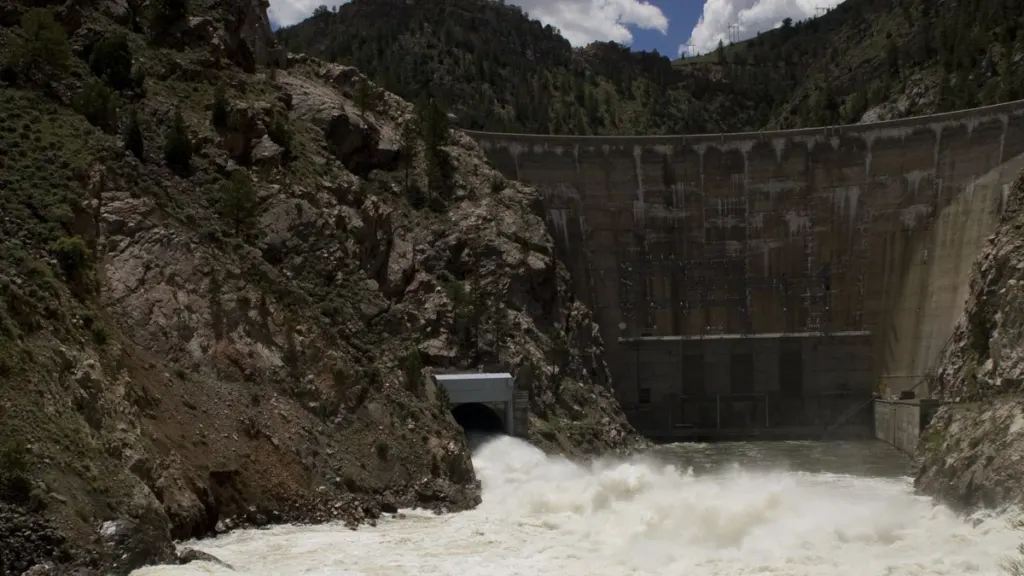
Seminoe Dam on the North Platte River in Carbon County, Wyoming. Photo: U.S. Bureau of Reclamation photographer, public domain, via Wikimedia Commons.
The big Bureau of Reclamation reservoirs on the North Platte River started the new water year holding less than half the water they usually do. At the end of October, the seven mainstem reservoirs from Seminoe down to Guernsey held about 759,900 acre-feet combined, according to the Bureau of Reclamation’s North Platte River Basin Water Supply and Utilization Report for October 2026, published by its Wyoming Area Office in Mills this month.
That is 47% of the 30-year median for the end of October and 27% of the system’s roughly 2.8 million acre-feet of conservation capacity. A year earlier the same reservoirs held about 1,029,900 acre-feet. Two years earlier they held 1,713,400.
The two big reservoirs are the low ones
Nearly all of the shortfall sits in the two largest reservoirs at the top of the system.
- Seminoe Reservoir held 219,300 acre-feet, 34% of its median and 22% of its capacity of about 1,017,300 acre-feet.
- Pathfinder Reservoir held 195,000 acre-feet, 30% of its median and 18% of its capacity of 1,070,000.
- Glendo Reservoir in Platte County held 172,800 acre-feet, right at its median, though still only 35% of capacity.
- Alcova Reservoir held 159,400 acre-feet, 101% of its median.
October did little to help. Inflow across the system was about 18,900 acre-feet, 51% of the median for the month. The river gain between Pathfinder and Glendo was 20% of median. The Fremont Canyon powerplant below Pathfinder generated essentially nothing in October, against a median of 0.6 gigawatt hours.
Whose water is in the reservoirs
The report also breaks storage down by owner, and that is where the low numbers land on people. Water held for the North Platte Project, which includes Pathfinder and Guernsey storage, stood at about 110,100 acre-feet at the end of October. That is 24% of its median and 10% of its storage capacity. A year ago it was 201,000. Pathfinder Reservoir is the main irrigation water source for the North Platte Valley in eastern Wyoming and the Nebraska Panhandle, The Fence Post reported this week.
Kendrick Project storage was in better shape, at 582,300 acre-feet, or 60% of median. Glendo ownership water was at 44% of median, and water stored for transfer to the Inland Lakes in Nebraska was at 23%.
Two smaller accounts are worth knowing about in southeast Wyoming. The City of Cheyenne has a storage contract in Seminoe Reservoir, filled by exchange with Upper North Platte Basin water brought through the city’s trans-basin diversions. The contract was raised to 15,700 acre-feet in 2009. At the end of October, Cheyenne’s account held about 4,100 acre-feet, 85% of its median for the date. PacifiCorp stores water in Glendo for the Dave Johnston power plant, and its 1,700 acre-feet was also at 85% of median.
What it would take to refill
Reclamation’s water year runs from Oct. 1 to Sept. 30, so these numbers are the starting line for 2027. Reservoirs in this system refill mostly from spring snowmelt in the mountains of southern Wyoming and the headwaters in Colorado’s North Park, where the North Platte begins. With Seminoe and Pathfinder both under a quarter full, irrigators and water managers will be watching early snowpack closely this winter.
It has already been a hard year for dry country across the state. Ranchers in Johnson County shipped cattle early this fall because of drought. For the Colorado side of the region, our guide to where Northern Colorado’s water comes from explains how the Front Range’s separate systems work, and our year on a North Park cattle ranch shows the headwaters country in every season.
Reclamation publishes the report monthly. More ranch and water coverage is on our Ranch & Range page.
Add Read the West as a preferred source on Google (opens in a new tab)