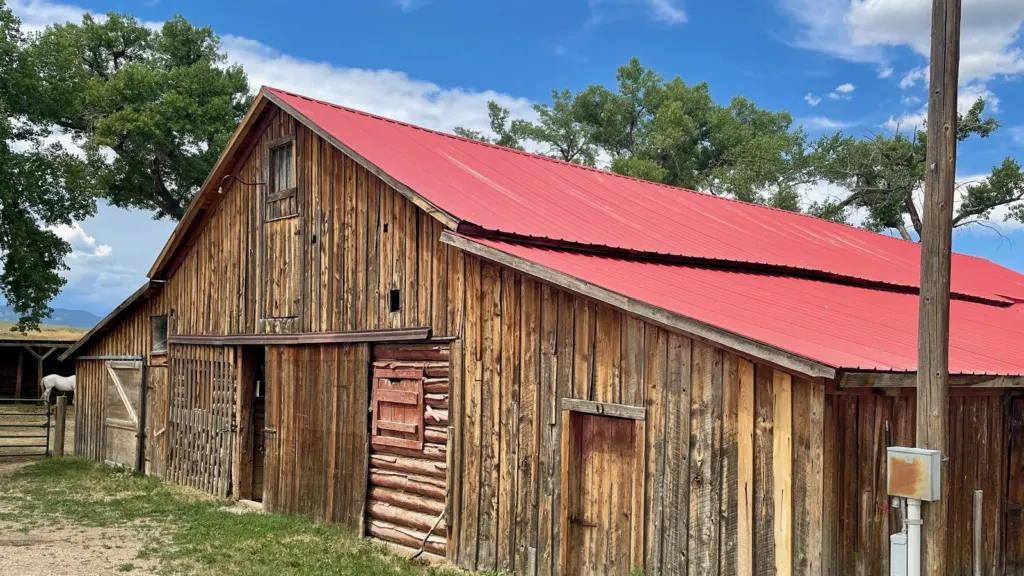
A barn at the TA Ranch in Johnson County, where ranchers have been shipping cattle earlier than usual this fall because of drought.Photo: Zeete, CC BY-SA 4.0, via Wikimedia Commons.
Severe drought is pushing cattle and sheep producers in Johnson County and across Wyoming to ship livestock earlier than usual and to cut herd sizes as pastures dry out and the cost of hay and trucking climbs, the Buffalo Bulletin reported in a story distributed Oct. 7 through the Wyoming News Exchange. Micah Most, a University of Wyoming Extension agriculture and natural resources educator in Johnson County, told the paper the severity and duration of this year’s drought “has been the big thing,” after a warm, dry winter, late moisture that arrived too late to build snowpack, weak spring grass growth and irrigators who did not have enough water for a strong hay crop.
Austin Snook, co-owner of Buffalo Livestock Marketing, said the sale barn started seeing yearlings in August and, since the end of August, some spring calves, which usually do not arrive until mid to late October or early November. Most said stock reservoirs have dried up on the east side of the county, leaving some sheep operations facing the prospect of hauling water, and that many sheep producers have also chosen to ship early to reduce the nutritional needs of ewes after weaning. Some operators are moving animals to feed, including sugar beet or corn residue in other parts of the state, rather than hauling hay to the livestock, he said.
Snook told the Bulletin that cattle are still bringing high prices, even after a softer summer market: calves that sold for about $1.90 a pound four or five years ago were, he said, selling for nearly or just over $5 a pound. He also said talk about cheaper beef had weighed on buyer psychology. Most said the duration and compounding nature of the drought have some in the industry worried this could be a “make or break season” for tight-margin operations, and that producers are hoping for a cold, wet winter to replenish soil moisture.
The U.S. Drought Monitor’s national summary for Oct. 13 said drought conditions across the High Plains were largely unchanged that week, with only localized improvements in portions of Wyoming and Colorado. It said precipitation in parts of those states was generally insufficient, and that significant drought persisted across portions of the western High Plains, particularly in Wyoming and Colorado, because of longer-term precipitation deficits and short soil moisture.
Add Read the West as a preferred source on Google (opens in a new tab)