
 By
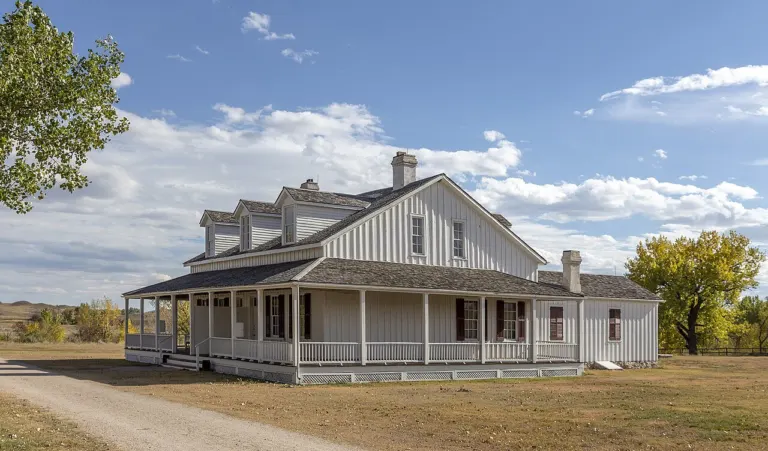
Photo: Carol M. Highsmith / Wikimedia Commons, Public domain
For twenty seasons, from 1955 to 1975, Gunsmoke brought a Kansas cattle town into American living rooms every week. With 635 episodes, it was the longest-running live-action prime-time drama in U.S. television for decades. At its center was James Arness as U.S. Marshal Matt Dillon.
From radio to television
Gunsmoke began on CBS radio in 1952, with William Conrad voicing Dillon. The radio show was praised for adult, realistic storytelling at a time when many Westerns were aimed at children. When CBS moved the series to television in 1955, it recast the parts. Arness, then a young actor known for supporting roles, got the lead, and John Wayne appeared on camera to introduce the first episode.
Dodge City on the small screen
The show was set in Dodge City, Kansas, a real cattle-trail town on the Santa Fe Trail, in the 1870s and 1880s. Its regular cast grew into one of television’s best-known ensembles: Amanda Blake as Kitty Russell, Milburn Stone as Doc Adams, Dennis Weaver as Chester Goode and, later, Ken Curtis as Festus Haggen. Burt Reynolds was part of the cast for several seasons in the 1960s. The show began in half-hour black-and-white episodes and later moved to an hour and to color.
James Arness
Arness was born James Aurness in Minneapolis on May 26, 1923. His younger brother was the actor Peter Graves. Arness served in the U.S. Army in World War II and was seriously wounded at Anzio, an injury that affected his leg for the rest of his life. After Gunsmoke, he starred in the frontier miniseries and series How the West Was Won and returned as Dillon in several television movies beginning with Gunsmoke: Return to Dodge in 1987. He died on June 3, 2011.
Why it lasted
The show outlived the great wave of TV Westerns of the late 1950s by more than a decade. Part of the reason was its willingness to tell small stories about ordinary people in a hard place, with Dillon as much a peacekeeper as a gunfighter. Reruns still air on classic-television channels, and the episodes are widely available on disc and streaming.
Sources: CBS program records and published episode guides; Library of American Broadcasting and radio archives for the 1952 to 1961 radio series; Obituaries published in June 2011.