 By
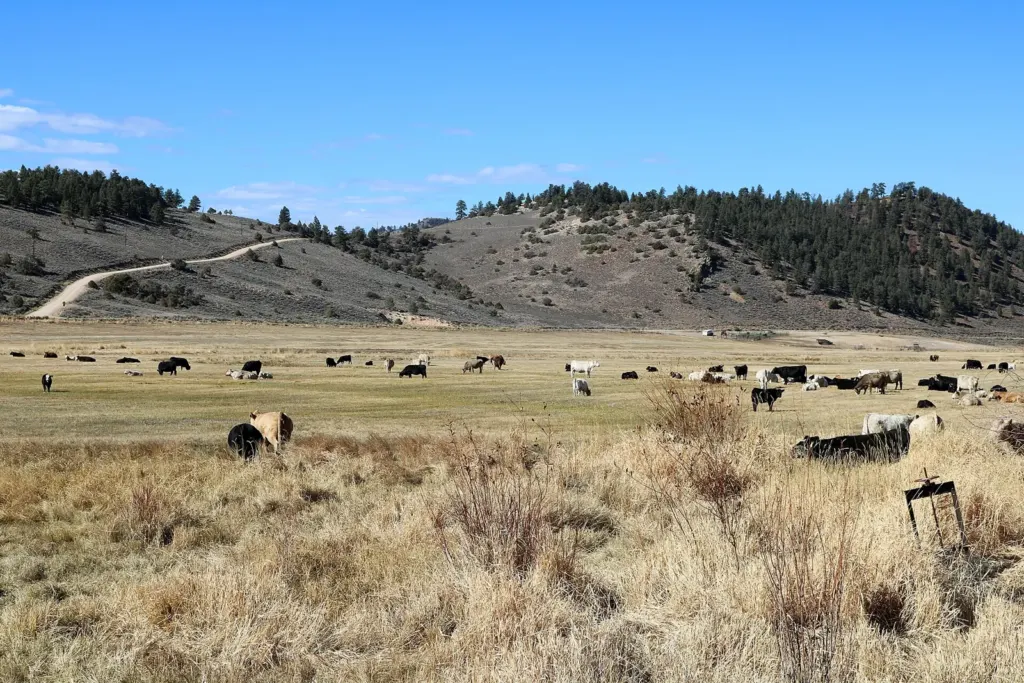
Cattle on a ranch in Powderhorn, Colorado. Photo: Jeffrey Beall via Wikimedia Commons, CC BY 4.0
Cattle, horses, sheep and other animals coming into Colorado from parts of Texas and New Mexico now face tighter entry rules, as the state tries to keep New World screwworm out of its herds.
Colorado Agriculture Commissioner Kate Greenberg adopted an updated emergency rule on Oct. 9, replacing an earlier emergency rule that expired that day. The Colorado Agricultural Commission had reviewed the proposal and recommended its adoption.
“With ongoing NWS outbreaks in neighboring regions and increased international livestock transport, updating our emergency rule is essential to protect the health and safety of Colorado’s animals and livestock industry,” State Veterinarian Dr. Maggie Baldwin said in the department’s announcement.
What the pest does
The New World screwworm is a fly whose larvae feed on living tissue. Females lay eggs in open wounds, which can be as small as a tick bite or as routine as a dehorning wound. The larvae burrow in, and the wound expands and deepens. The condition, called myiasis, can kill an animal if it goes untreated. Screwworms can infest livestock, pets, wildlife and, rarely, people.
The United States eradicated the pest in 1966 by releasing sterile male flies, which mate with wild females and leave them with eggs that never hatch. A sterile-fly barrier in eastern Panama kept screwworm out of Central and North America for years. Since 2023, cases have spread north through Central America and into Mexico, according to the Colorado Department of Agriculture. The department reports more than 209,000 animal cases and about 2,600 human cases across Central America and Mexico, including more than 44,000 in Mexico alone.
USDA confirmed a detection in Zavala County, Texas, in June, and cases have since been reported in Texas and New Mexico. The first wild fly detection in the U.S. came Sept. 25 in Brewster County, Texas, according to the state.
What the rule requires
Under the updated rule, no animal with screwworm myiasis may enter Colorado. Warm-blooded animals from an established screwworm infested zone must have:
- an inspection before they move,
- a certificate of veterinary inspection issued within five days of entry,
- an entry permit,
- approved treatment of any open wounds, and
- an inspection after they arrive.
Dogs and cats entering from states with active infested zones need a health certificate issued within five days before entry.
The rule also sets requirements for animals from screwworm-affected countries, including Mexico. Animals that meet federal import protocols from USDA, CDC and Customs and Border Protection automatically meet the state standard, but the rule adds safeguards for other species and movements that federal checks may not cover. The state can order noncompliant animals quarantined or sent back to where they came from, and violations can bring civil or criminal enforcement.
What it means on the ranch
For most Colorado producers, the changes matter most when buying or moving animals from the Southwest. The extra inspection and five-day certificate window add paperwork and timing pressure to those purchases, and buyers will want to confirm a seller’s location against current infested zone maps on screwworm.gov.
Cold weather is on Colorado’s side. The fly’s life cycle slows as temperatures drop, and it dies in freezing conditions. That does not end the risk from animals moved in with active infestations.
The state lists the signs producers should watch for: animals that are restless, separating from the herd, shaking their heads or eating less, wounds that grow or smell of decay, and maggots visible in a wound. Screwworm is a reportable disease in Colorado, and suspected cases must be reported before lab confirmation. Veterinarians, producers and owners can report through the state’s online myiasis form or by calling the State Veterinarian’s Office at 303-869-9130. Cases in wildlife go to the local Colorado Parks and Wildlife office.
The full emergency rule and updates are posted at ag.colorado.gov/NWS.