 By
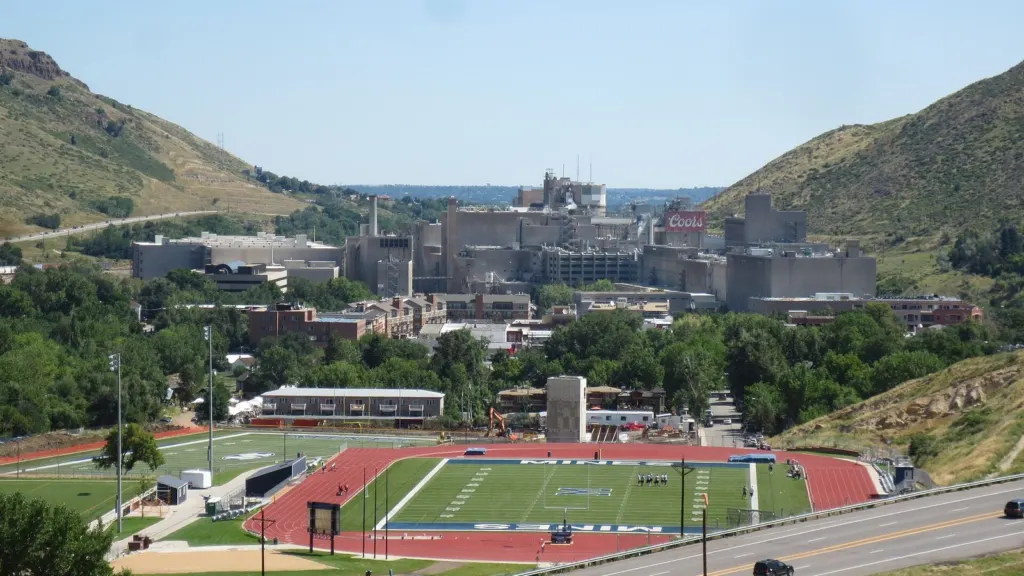
Photo: Ariarmstrong, CC BY-SA 4.0, via Wikimedia Commons.
Adolph Coors was a German immigrant who had trained as a brewer before stowing away to America. In 1873 he and partner Jacob Schueler set up a brewery in an old tannery in Golden, at the mouth of Clear Creek Canyon, then a supply town for the mining camps in the hills. Coors bought out his partner a few years later.
The company’s longevity owes a lot to what it did when it could not sell beer. Colorado went dry in 1916, four years before national Prohibition. Coors made malted milk, sold near beer and expanded a ceramics business that grew into CoorsTek, a separate company still based in Golden. When beer became legal again in 1933, the brewery was ready.
A regional beer that went national
For decades Coors was sold only in a handful of Western states, and its scarcity gave it a reputation in the East; people drove cases across state lines. The company expanded distribution nationwide in the 1980s. It merged with Canada’s Molson in 2005, and Molson Coors now runs the business from Chicago and Montreal, though Golden remains its largest brewery.
The Golden site is often described as the largest single-site brewery in the world. It also has a can plant, and the brewery buys barley from growers in the San Luis Valley and other Western farms.
The company town question
Golden’s relationship with its biggest employer is close and sometimes tense. The plant shapes traffic, water use and the smell downtown on brewing days. The free tours, a fixture for generations, were reworked into a paid experience after the pandemic. For a town of about 20,000, the brewery is still the economic anchor, alongside the Colorado School of Mines up the hill.
Add Read the West as a preferred source on Google (opens in a new tab)