 By
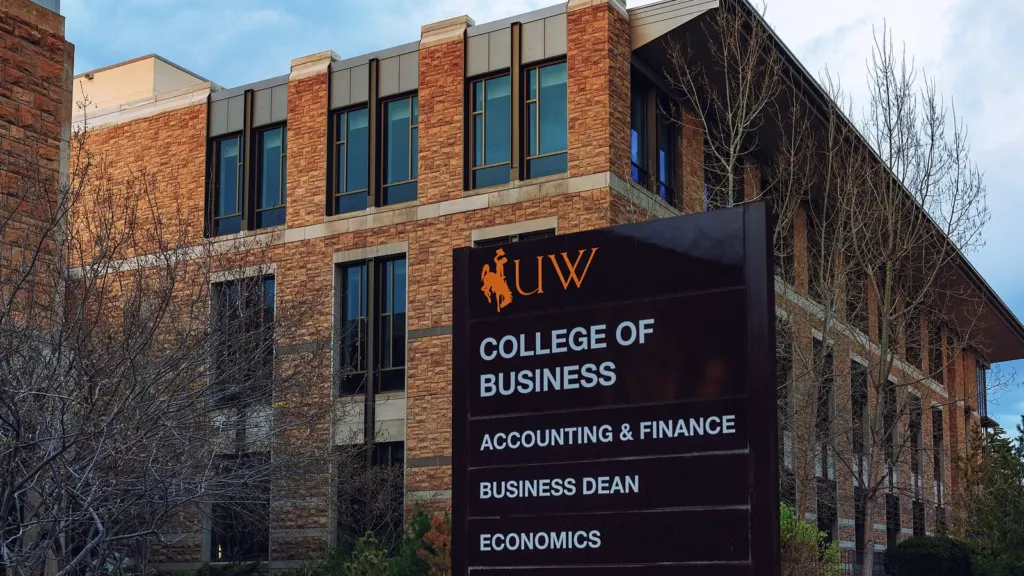
The University of Wyoming campus in Laramie, where WYAlgae's research was done. Photo: Tony Webster, CC BY 2.0, via Wikimedia Commons.
Six weeks ago Alan Stenquist was a scientist with a soil product and no company. On Sept. 15 he sat down with Baylie Evans, who runs the gBETA Wyoming accelerator, to ask whether his lab work could be a business. By late October his Laramie startup, WYAlgae, had been picked as one of five companies in the program’s fall cohort.
“It’s been a whirlwind six weeks, from deciding that our technology is commercially viable and starting a startup,” Stenquist said in a University of Wyoming announcement on Oct. 27. He called himself “a scientist with little business knowledge” and said the program had already connected him with mentors working with him on marketing and financing.
Algae for dry ground
WYAlgae makes what it calls a living soil amendment. It’s algae-based, it holds water, and it’s meant to improve soil health. The first customers are greenhouses and plant nurseries, which use it to help seeds germinate and to keep young seedlings from drying out. Later the company wants to sell to home gardeners and, eventually, to large farms.
Holding water in soil is a practical problem in Wyoming, where much of the state gets little rain and the growing season is short. The university says its trials, from small tests up to larger ones, showed the product works in real-world conditions.
Stenquist grew up in Salt Lake City and came to Laramie for graduate school. He finished a Ph.D. in molecular and cellular life sciences at UW in 2024, then worked as a postdoctoral researcher there until August. He’s now an independent research fellow at the university and will teach as an adjunct in the chemical engineering department this spring.
The rest of the cohort
gBETA is run by gener8tor, a Wisconsin-based venture firm and accelerator, with Microsoft as a partner. It’s free, lasts seven weeks and takes no equity. The Cheyenne-Laramie County Economic Development Joint Powers Board and The Business Studio at Laramie County Community College provide local support. This fall’s five companies came from dozens of applicants in four Wyoming towns:
- Plentitude, Cheyenne. Software for restoration contractors, the crews that come in after floods and fires, starting with insurance claims and getting paid. Founded by Dalton Gregory and Jacob Warthen.
- Meerkat, Parkman. A tool that maps professional networks so AI assistants can suggest warm introductions. Founded by Ralph Schonenbach and Mary Shea.
- Velar Scientific, Cheyenne. Simulation software that predicts how electronic, optical and quantum devices will behave before they’re built. Founded by Michael Rudolph.
- WyoDynamics, Cody. Systems that use natural gas that would otherwise be wasted to grow microalgae and produce astaxanthin, an antioxidant sold as a supplement and feed additive. Founded by Stephen and Laurel Elias.
- WYAlgae, Laramie. Stenquist’s company.
Two of the five are algae companies, which says something about where Wyoming research money and natural resources meet. Parkman, a ranching community near the Montana line in Sheridan County, isn’t where most people would look for an AI software startup.
“People are sometimes surprised by the kinds of companies being built in Wyoming,” Evans said. “We have founders developing technology for semiconductor manufacturing; finding new uses for our natural resources; and creating software that can serve customers anywhere in the world.”
What the program has produced so far
gBETA Wyoming started in 2020. Since then it has worked with 60 startups from 15 communities, according to the program. It says those alumni have created more than 220 jobs and raised nearly $47 million in follow-on funding.
Those are the program’s own numbers, and they’re cumulative, but for a state of fewer than 600,000 people that’s a real pipeline. Wyoming has spent years trying to build an economy that leans less on coal, oil and gas severance taxes, and early-stage tech companies are one of the pieces the state and its universities keep pointing to.
The cohort finishes with a public Startup Showcase on Jan. 27 at Laramie County Community College in Cheyenne, where each founder pitches to investors, mentors and anyone else who shows up. By then Stenquist will be teaching a class and, if things go well, talking to buyers outside the greenhouse business.