 By
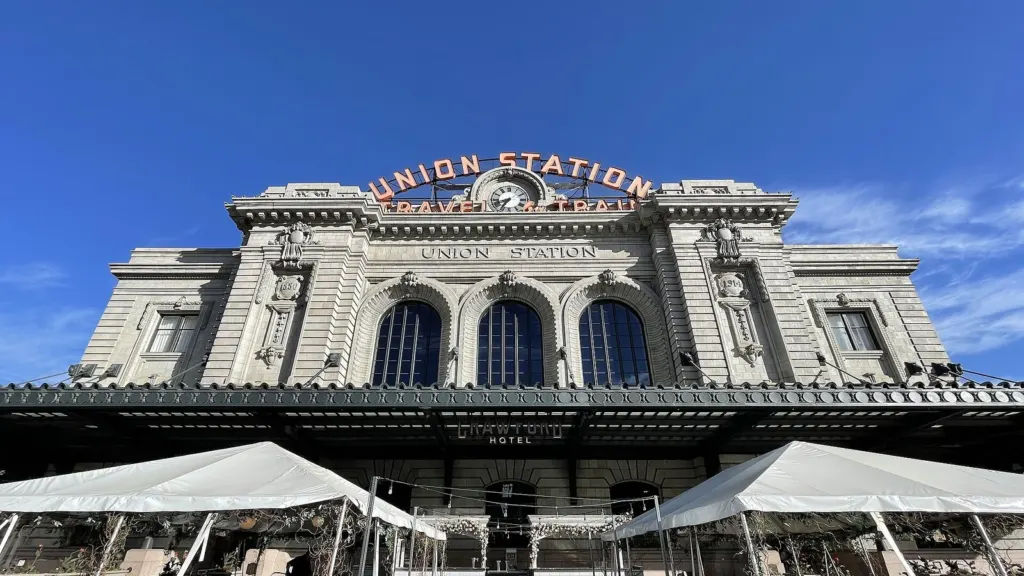
Photo: Missvain, CC BY 4.0, via Wikimedia Commons.
The first Union Station in Denver opened in 1881. After a fire, the central portion was rebuilt, and the current Beaux-Arts hall was completed in 1914. For decades it was the main gateway to the city, with dozens of trains a day.
Passenger rail declined after World War II, and by the 1990s the station saw only Amtrak and the seasonal ski train. The rail yards behind it were mostly empty.
The redevelopment
The Regional Transportation District bought the station and surrounding land in 2001, and a public-private partnership redeveloped it. Underground bus bays, a light rail station and a canopy over the commuter rail tracks were built behind the old building. The historic hall was renovated and reopened in 2014 as the Crawford Hotel, with restaurants, bars and shops in the Great Hall.
The A Line commuter train to Denver International Airport opened in 2016, connecting the station to the airport.
The surrounding area
The project helped spur a large wave of development on the old rail yards, creating offices, apartments and hotels. The area became one of Denver’s most expensive neighborhoods and a center for new office buildings.
Since the pandemic, downtown Denver’s office market has weakened, and foot traffic has been slower to recover than in other parts of the city. Union Station is still one of the busiest places downtown, but its neighbors are dealing with high vacancy rates and questions about the future of office work.
Add Read the West as a preferred source on Google (opens in a new tab)