 By
Photo: Carol M. Highsmith, public domain, via Wikimedia Commons.
The Grand Valley along the Colorado River in western Colorado has been growing fruit since the 1880s, when settlers dug canals to bring river water to the dry benchland. Peaches became the signature crop, and the town of Palisade, just east of Grand Junction, built its identity around them.
The climate is the reason. The Book Cliffs and Mount Garfield to the north block cold air and reflect heat, summer days are hot and nights cool, and the growing season is long for this elevation. The result is a sweet peach that Colorado shoppers seek out from late July through September.
The season
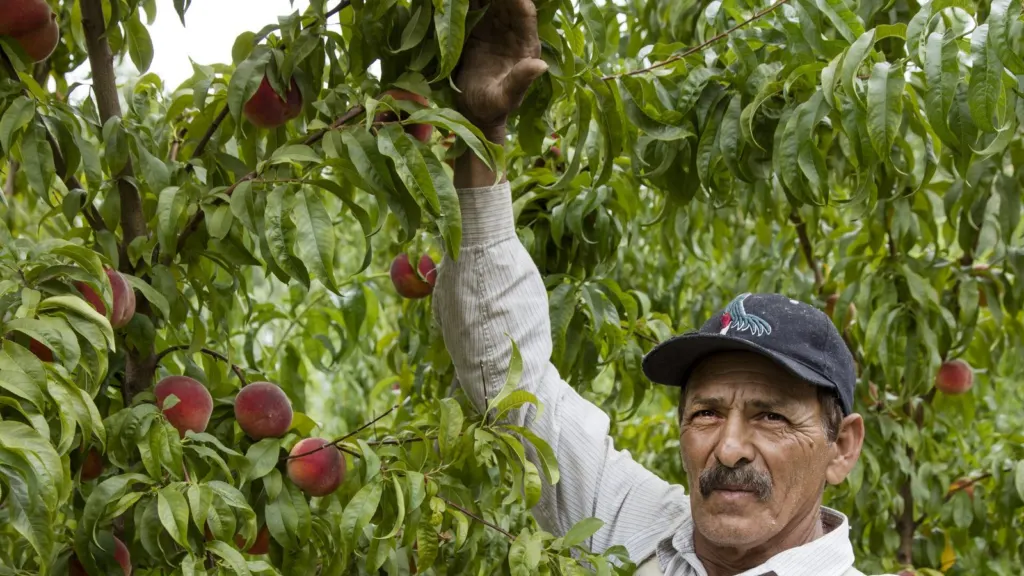
Orchards are mostly family-run, and many sell from roadside stands along U.S. 6 and East Orchard Mesa, while larger growers pack and ship to grocery stores in Denver and beyond. The Palisade Peach Festival, held each August since the late 1960s, draws thousands of visitors.
Many orchards also grow cherries, apricots, apples and grapes, and the valley’s wineries have become a second agricultural draw.
The pressures
Growers name the same problems year after year: late spring frosts that can wipe out a crop, a shortage of seasonal pickers, and water. Many orchards depend on seasonal workers, often through the federal H-2A visa program.
Water rights on the Colorado River are increasingly contested as the river’s flows decline and the states that share it negotiate how to cut use. Grand Valley irrigation districts hold old senior rights, but growers watch those talks closely.
Add Read the West as a preferred source on Google (opens in a new tab)