 By
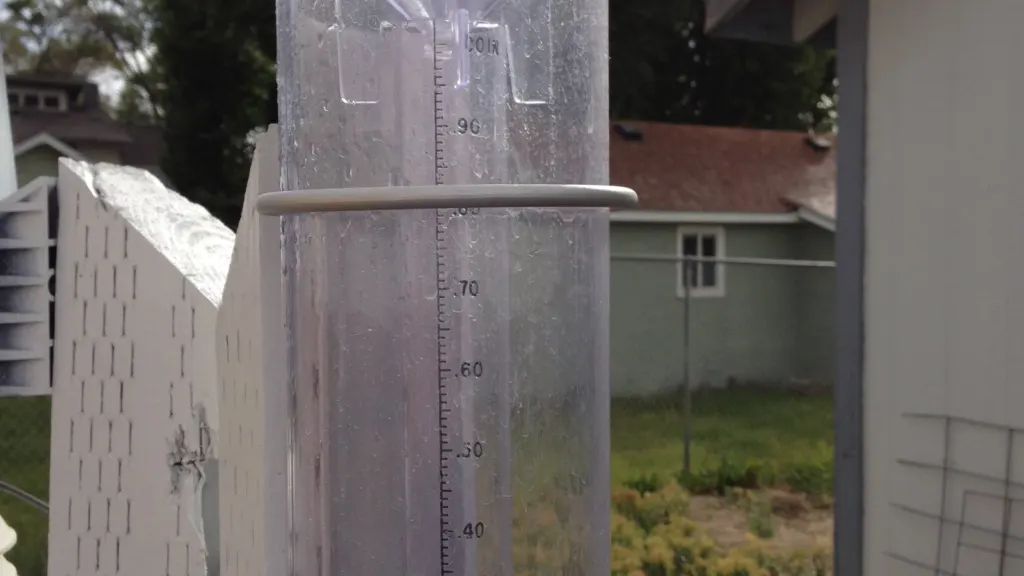
A 4-inch plastic rain gauge of the type used by CoCoRaHS volunteer observers. Photo: Famartin, CC BY-SA 3.0, via Wikimedia Commons.
Nolan Doesken, the former Colorado state climatologist who turned a 1997 Fort Collins flood into a volunteer weather network now active across North America, has died of Parkinson’s disease, Colorado State University and the Colorado Climate Center announced this week.
Doesken spent more than 40 years at CSU. He was Colorado’s assistant state climatologist from 1977 to 2006 and state climatologist from 2006 to 2017, and he directed the Colorado Climate Center in the university’s Department of Atmospheric Science over the same decade. For many people in Northern Colorado, though, he was simply the man who explained the weather, a frequent voice in local and national news whenever a storm, drought or record snow needed context.
From the Spring Creek flood to 28,000 gauges
His best-known work began after the Spring Creek flash flood of July 1997, which killed five people in Fort Collins. The flood showed how little forecasters knew about where the heaviest rain was falling, because there were too few measurements on the ground. Doesken’s answer was to recruit ordinary residents with inexpensive plastic rain gauges to report rain, hail and snow every morning.
That effort became the Community Collaborative Rain, Hail and Snow Network, or CoCoRaHS. It started with volunteers in Northern Colorado and grew as other CSU researchers won National Science Foundation and NOAA funding to expand it. According to CSU’s announcement, the network now has more than 28,000 active observers in the United States, Canada, Puerto Rico, the U.S. Virgin Islands, Guam and the Bahamas, and it is the largest source of daily precipitation observations in North America. More than 66,000 people have taken part since it began.
Doesken also wrote more than 50 peer-reviewed papers and co-developed the Standardized Precipitation Index, which is used around the world to measure drought. He served as president of the American Association of State Climatologists from 2008 to 2010, and the climate center says he was one of only three people named an honorary member of that group. In 2014 he and the CoCoRaHS team received a special award from the American Meteorological Society for building the volunteer network.
A storyteller to the end
Born in Royal, Illinois, in 1952, Doesken told CSU’s Water Resources Archive in a 2021 oral history that he was watching the sky before he was old enough for school. He came to CSU in 1976. The climate center’s tribute notes he stood 6-foot-6 and was, in his college years, the top popcorn seller at University of Illinois football games. It also says he wrote a book, “The Mysteries of Nature: Stories from Our Farm,” scheduled for publication late this year.
Colleagues described him as warm and approachable. “Nolan had a way of making you feel as if you knew him, even if you had never met him,” current State Climatologist Russ Schumacher said in the university’s announcement. Tony Frank, chancellor of the CSU System, called him “a remarkable scientist, a dedicated public servant” who could make science accessible to people.
Doesken left a note to be read to CoCoRaHS volunteers after his death. “When I came up with the idea for CoCoRaHS back in 1998, I had no idea that this Citizen Science precipitation network would grow to what it is today,” he wrote. His final wish, he said, was that observers “keep our network going strong in the years ahead.”
CSU says a celebration of life will be held in Fort Collins this spring, with details to come. Gifts in his memory can be made through the CoCoRaHS annual fundraiser. For more on the region’s weather and water, see our report on low storage in the North Platte reservoirs and our Community coverage.
Add Read the West as a preferred source on Google (opens in a new tab)