 By
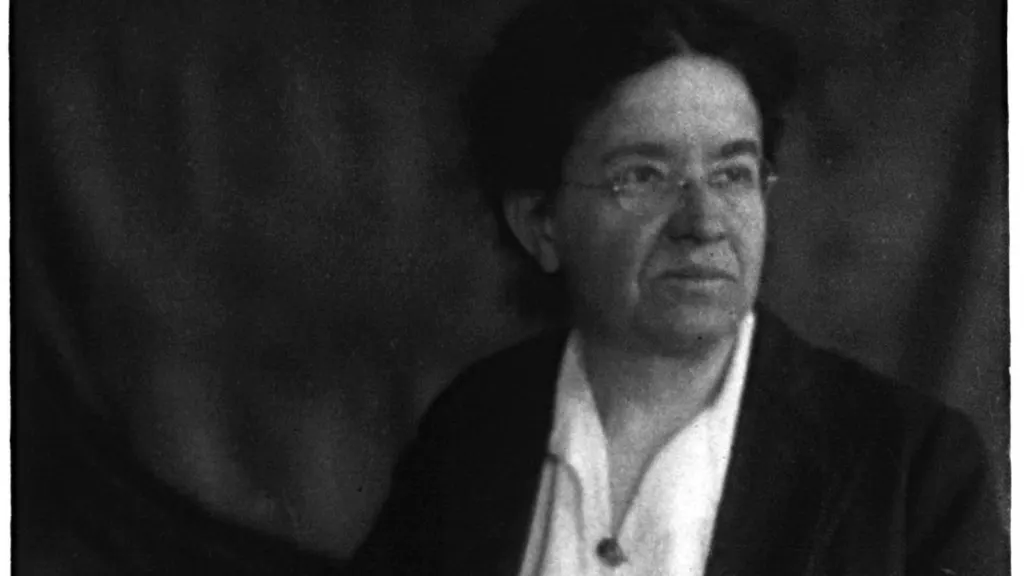
Photo: Unknown authorUnknown author, public domain, via Wikimedia Commons.
Florence Rena Sabin was born in 1871 in Central City, Colorado, a mining town where her father worked as a mining engineer. After her mother’s death she was raised partly in Denver and later with relatives in the East. She graduated from Smith College and enrolled at the Johns Hopkins School of Medicine, which was one of the few to accept women.
A research career
At Johns Hopkins she studied the lymphatic system and blood cells, and published a widely used atlas of the brainstem. In 1917 she became the first woman named a full professor at the medical school. In 1925 she joined the Rockefeller Institute for Medical Research in New York, where she studied tuberculosis, and she became the first woman elected to the National Academy of Sciences that year.
Coming home
Sabin retired to Denver in 1938. In 1944 Governor John Vivian asked her to lead a committee on public health. She found that Colorado’s health laws were badly outdated and that the state had high rates of disease. She traveled the state to build support, and the Legislature passed a set of reforms in 1947, often called the Sabin health laws.
She later managed Denver’s health department, leading campaigns against tuberculosis and improving sanitation.
Sabin died in 1953. Colorado placed her statue in the National Statuary Hall Collection, and several schools and buildings bear her name.