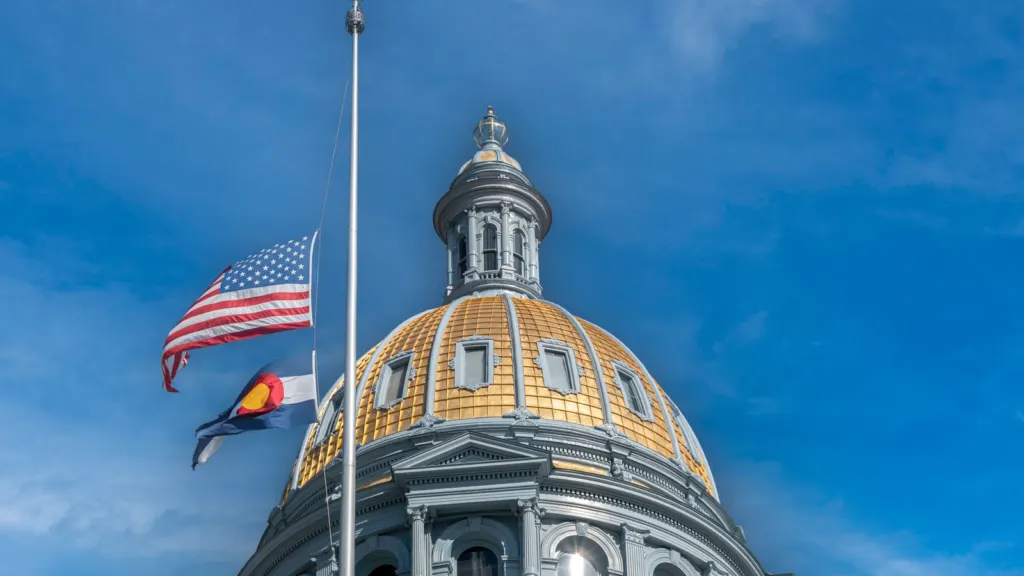
The Colorado State Capitol in Denver. Voters approved Proposition 137, which directs existing sporting-goods sales tax to conservation and wildfire work.Photo: xiquinhosilva, CC BY 2.0, via Wikimedia Commons.
The Associated Press called Colorado’s Proposition 137 on Friday morning, Nov. 6, with 51.63% of the counted votes in favor and 48.37% opposed, The Colorado Sun reported. The measure will keep already-collected state sales tax on sporting goods outside the Taxpayer’s Bill of Rights cap and direct that money to conservation, wildfire work and outdoor recreation. The Sun, updated Nov. 9, said the measure will divert $175 million to $180 million a year at first, and potentially more later. The Post Independent, citing unofficial Secretary of State results as of Saturday evening with about 98% of the vote counted, reported 1,347,245 yes votes and 1,249,749 no votes, or about 52% in favor, and described a pool of about $175 million.
The two outlets described the split of that money in slightly different ways. The Sun said the measure directs $83 million a year to Great Outdoors Colorado, nearly doubling the conservation program’s annual lottery distribution; another $83 million to the Department of Natural Resources and the Colorado State Forest Service for wildfire risk reduction and rehabilitation of burned watersheds; and about $4.5 million a year each to the Colorado Office of Outdoor Recreation Industry and the Colorado Parks and Wildlife Outdoor Equity Grant Program. The Post Independent said 47.5% would go to GOCO, 47.5% to wildfire mitigation, forest management and watershed restoration, and the remaining 5% to outdoor recreation, economic development and equity programs. The Sun reported that the state currently spends about $16.4 million on wildfire risk reduction and another $5 million a year on restoring burned landscapes, and that in tight budget years, when the TABOR surplus is small, the Legislature could bypass the measure’s spending directives.
The measure does not raise the sales-tax rate. It does reduce the amount that would otherwise go back to taxpayers as TABOR refunds. The Post Independent said nonpartisan estimates put that reduction at $26 to $83 for single filers, or double that for joint filers, in some years. The Sun also cited legislative analysts’ estimates of a $26 to $83 reduction for single taxpayers. Supporters included The Nature Conservancy and other conservation groups; the Sun reported that the main campaign committee raised $6.2 million, while opponents who worried the money could spur more logging raised $12,965. The Sun noted that the Colorado Democratic Party opposed the measure over its effect on lawmakers’ flexibility in lean years.
Add Read the West as a preferred source on Google (opens in a new tab)