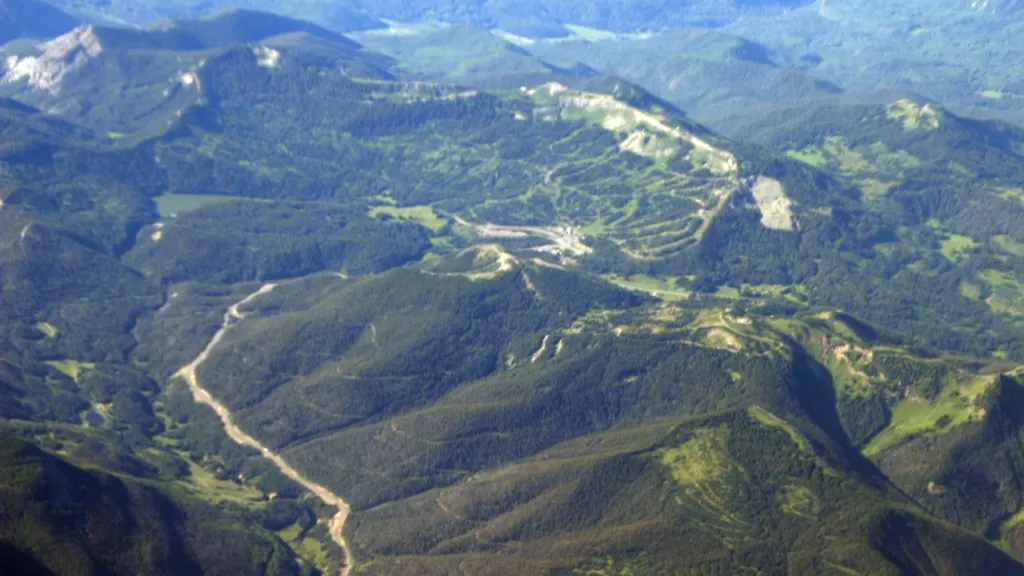
Wolf Creek Pass, the U.S. 160 corridor between Pagosa Springs and South Fork. CDOT is making temporary repairs after two November floods closed the pass.Photo: Doc Searls, CC BY-SA 2.0, via Wikimedia Commons.
The Colorado Department of Transportation said Nov. 10 that it is racing to restore limited traffic over Wolf Creek Pass as early as this weekend and to reopen Colorado 151 before Thanksgiving, after two flood events in two weeks tore up highways in southwestern Colorado. In an official travel advisory, CDOT Executive Director Shoshana Lew said crews had “made remarkable progress” and were “on track to get limited traffic on Wolf Creek Pass open by this weekend, with CO 151 open before Thanksgiving,” though drivers should expect speed reductions and extra traffic control. As of that morning, the department said three highways remained fully closed: U.S. 160 over Wolf Creek Pass, U.S. 160 at the Piedra River Bridge and Colorado 151 south of Chimney Rock Monument.
Julie Constan, CDOT’s regional transportation director, said contractors began stabilizing Wolf Creek Pass days after the first storm washed out a section east of the summit, and that a second round of rain damaged more of the road. The official advisory said the second storm, on Nov. 1, caused destruction at several new locations along the 26-mile corridor between Pagosa Springs and South Fork, including washouts in The Narrows on the east side and mud and rockslide clearing west of the summit. The Colorado Sun reported Constan’s Tuesday update that four teams had been clearing 6 to 8 feet of rocks, mud and debris on the west side, and that in places guardrails were “hanging in thin air.” She told the Sun the pass typically carries 2,700 to 3,400 vehicles a day. “It’s not going to be your normal trip across Wolf Creek Pass, but at least we’ll be able to get people through and across,” she said.
The official advisory said floodwaters completely washed out two segments of Colorado 151 south of Chimney Rock, damaging drainage along a three-mile stretch at mileposts 27 to 30, and that reopening the road would eliminate a detour through New Mexico, cutting the drive between Durango and Pagosa Springs from 3.5 hours to about 1.5 hours. Lew told the Sun crews were repairing four “very seriously damaged areas” on that roughly three-mile stretch. Constan told the Sun that even after the road reopens, the work zones would “add probably 45 minutes to that normal commute between Durango and Pagosa,” which she said was still better than three and a half hours.
At U.S. 160, floodwaters collapsed the piers of the Piedra River Bridge at mile point 121 on Oct. 31, CDOT said, and the structure requires a complete rebuild. The department said a temporary bridge on a temporary alignment is being built so travel between Durango and Pagosa Springs can resume, with work on a permanent structure to follow. The Sun reported that materials were still being shipped and that it would take about 30 days to build the temporary span once they arrive; state officials there said they anticipate the temporary bridge, one lane in each direction, will open by mid-January and the permanent bridge by the end of 2027. After the first storm, the Sun reported, CDOT requested $65 million in federal help, a figure Lew said she expects to rise “in the order of magnitude of 100 million,” with a more refined estimate coming in the following days. CDOT is advising travelers to check COtrip.org or the COtrip Planner app for conditions, which can change daily.
Add Read the West as a preferred source on Google (opens in a new tab)