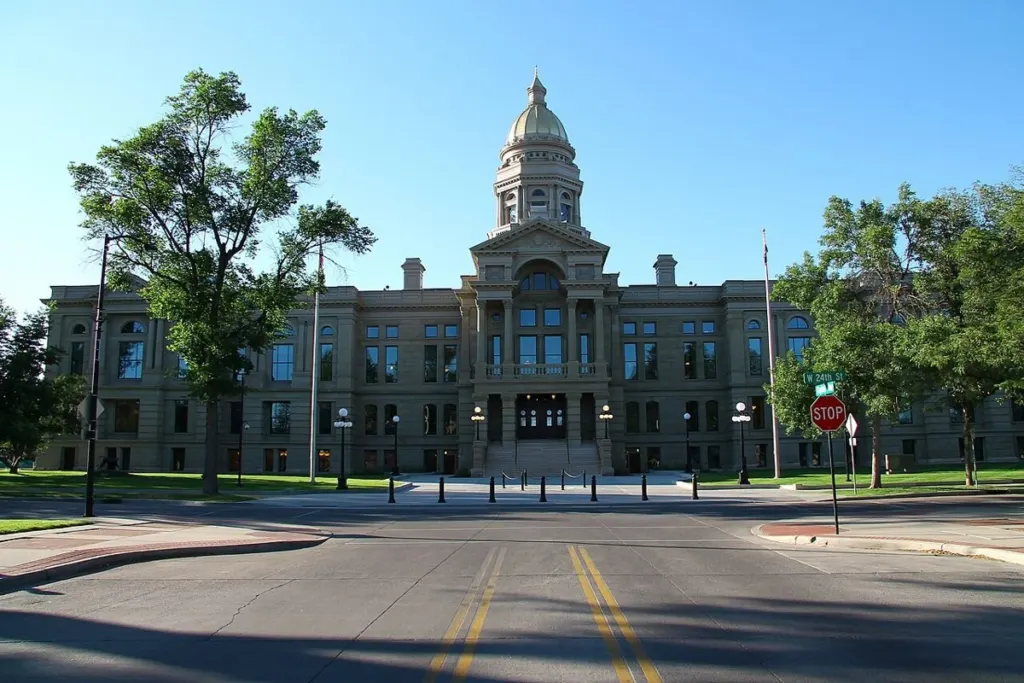
Photo: formulanone from Huntsville, United States / Wikimedia Commons, CC BY-SA 2.0
Cheyenne is less than an hour’s drive from Fort Collins, and many households in the region weigh which side of the state line to live on. Taxes are part of that decision. The short version: Wyoming has no personal income tax, while Colorado does, but the other taxes narrow the gap more than many people expect.
Income tax
Colorado taxes income at a single flat rate, set at 4.4 percent in state law, applied to federal taxable income with Colorado adjustments. In years with a large state revenue surplus, the rate can be temporarily lowered as a way of refunding money under the Taxpayer’s Bill of Rights; see our explainer on TABOR refunds. Wyoming has no personal income tax. For a household earning $100,000 in taxable income, the difference is several thousand dollars a year.
Sales tax
Colorado’s state sales tax rate is 2.9 percent, but counties, cities and special districts add their own, so the combined rate in most Front Range cities is well above 7 percent. Wyoming’s state rate is 4 percent, and counties may add local-option taxes, typically bringing the combined rate to about 5 to 6 percent. Wyoming also taxes groceries at a lower rate than general merchandise in many counties, while Colorado exempts groceries from the state tax but lets many cities tax them.
Property tax
Both states tax only part of a home’s value. Colorado applies a residential assessment rate, recently about 7 percent for school taxes and somewhat lower for other local governments, to the actual value. Wyoming assesses residential property at 9.5 percent of market value, with a lower 8.3 percent rate for owner-occupied primary homes beginning in 2026. Local mill levies then determine the bill. Because Wyoming relies heavily on mineral severance taxes and its permanent mineral trust fund, many of its local mill levies are modest. In practice, property tax on a similar home is often comparable on both sides of the line, but it varies widely by district.
Vehicles
Both states charge annual registration fees that depend on the vehicle’s value and age. Colorado’s specific ownership tax is part of the registration bill, and Wyoming charges county and state fees on a similar basis. Newer, more expensive vehicles cost more to register in either state.
The other side of the ledger
Taxes are only one part of the cost of living. Housing prices, commuting costs, utility rates and insurance can outweigh the tax difference, and public services differ too. A household that works in Colorado but lives in Wyoming still owes Colorado income tax on wages earned in Colorado.
A quick way to compare
Take your expected Colorado taxable income times the current rate, add an estimate of annual taxable spending times each area’s combined sales tax rate, and add the property tax shown on recent bills for comparable homes, which both county treasurers publish online.
Sources
- Colorado Department of Revenue, Taxation Division.
- Wyoming Department of Revenue: sales and use tax rates; Property Tax Division, residential assessment.
- Colorado Department of Local Affairs, Division of Property Taxation, residential assessment rates.
- Larimer County and Laramie County treasurers.