
 By
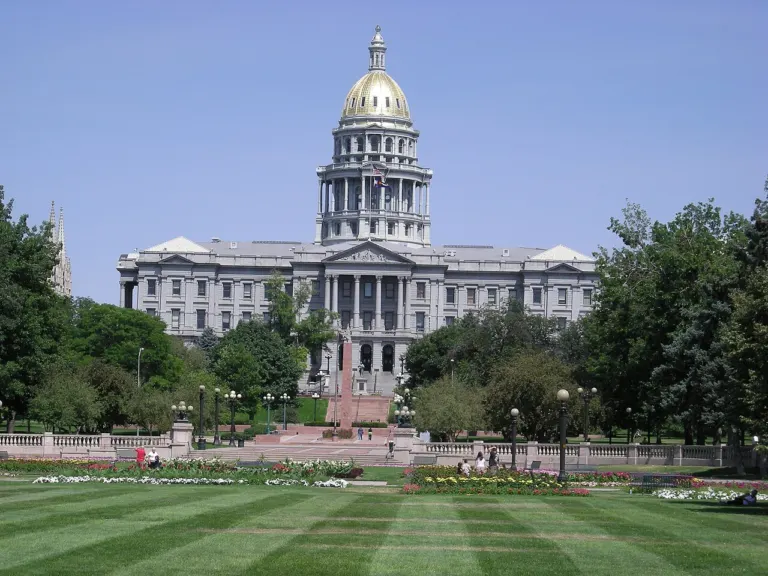
The Denver City and County Building. Photo: NateBergin, CC BY 4.0, via Wikimedia Commons.
Denver has a 2027 budget. The City Council passed Mayor Mike Johnston’s amended $1.684 billion general fund budget 8-3 on Monday night, a year after the council deadlocked on the last one.
Several members who voted yes made clear they weren’t happy with it. The general fund, which pays for police, fire, parks, streets, housing programs and most day-to-day city services, grows about 1% next year after two straight budgets in which spending fell by more than 2.5% combined, Denverite reported. Counting the airport, other enterprise funds, capital projects and debt service, the city’s total 2027 spending plan comes to about $6.08 billion.
Thin revenue, thin reserves
The city expects general fund revenue to grow just 1.1% next year, about $17.5 million, according to the Denver Gazette. Officials are counting on sales tax to do most of the lifting as downtown recovers, including the reopened 16th Street pedestrian area.
To pay for the council’s changes, Johnston drew on the city’s contingency reserve, existing department budgets and other sources. That trims contingency from 2.06% of general fund spending to 2.01%, about $33.8 million, just above the 2% floor the city charter requires. It leaves little room if sales tax comes in soft or an emergency hits.
What the council got
Under Denver’s strong-mayor system, the mayor proposes, the council recommends changes and the mayor decides which to accept. The council can override him only with a supermajority. The council approved five of 16 proposed amendments, and Johnston accepted them in a letter last Friday, the Gazette reported. Among them:
- Temporary Rental and Utility Assistance rises to $8.5 million, up from the $4.5 million Johnston first proposed. That is still well below the $15.1 million budgeted for this year.
- About $2 million to offset Denver Health’s costs of running Denver CARES, the city’s detox and sobering facility, after the mayor’s first draft gave the hospital no added money.
- More money for businesses hurt by city construction projects, and more staff at the 911 Emergency Communications Center.
Johnston said council requests for community arts and music events, park rangers, inspections and legal support for the council were also addressed. The budget includes a 2% merit raise for eligible city employees, costing $10.4 million, avoids furloughs and layoffs, and pays for repairs on seven road bridges.
“A budget is more than dollars and cents,” Johnston said in a statement. “It’s a mission statement on our priorities, values and beliefs.”
Who voted no, and why
Council members Paul Kashmann, Flor Alvidrez and Shontel Lewis voted against it. Stacie Gilmore was absent, and one council seat is vacant.
Kashmann’s objection centered on the Support Team Assisted Response program, which sends behavioral health workers instead of police to some 911 calls. He argued the city underfunds STAR given the volume of calls that fit it. A council push for more STAR money did not make it into the final budget. Lewis, who is running for mayor, called the budget a moral failure on STAR, eviction prevention and safety infrastructure. Alvidrez said she hadn’t consistently received the information she asked for and questioned whether the budget would be followed.
Several yes votes came with complaints. Councilmember Serena Gonzales-Gutierrez said it doesn’t matter in the end whether the council passes the budget or not, a nod to how little the final vote changes under Denver’s system. Amanda Sawyer, who voted no last year, voted yes and described a cycle with more money than expected but not enough to meet the council’s goals.
What’s next
The budget takes effect Jan. 1. Like other cities, Denver struggled as federal funding dried up and the economy wavered, Denverite noted, and the city is betting that rising economic activity will lift sales tax collections. With contingency barely above the charter minimum, the city has little cushion if those collections fall short.
Add Read the West as a preferred source on Google (opens in a new tab)